

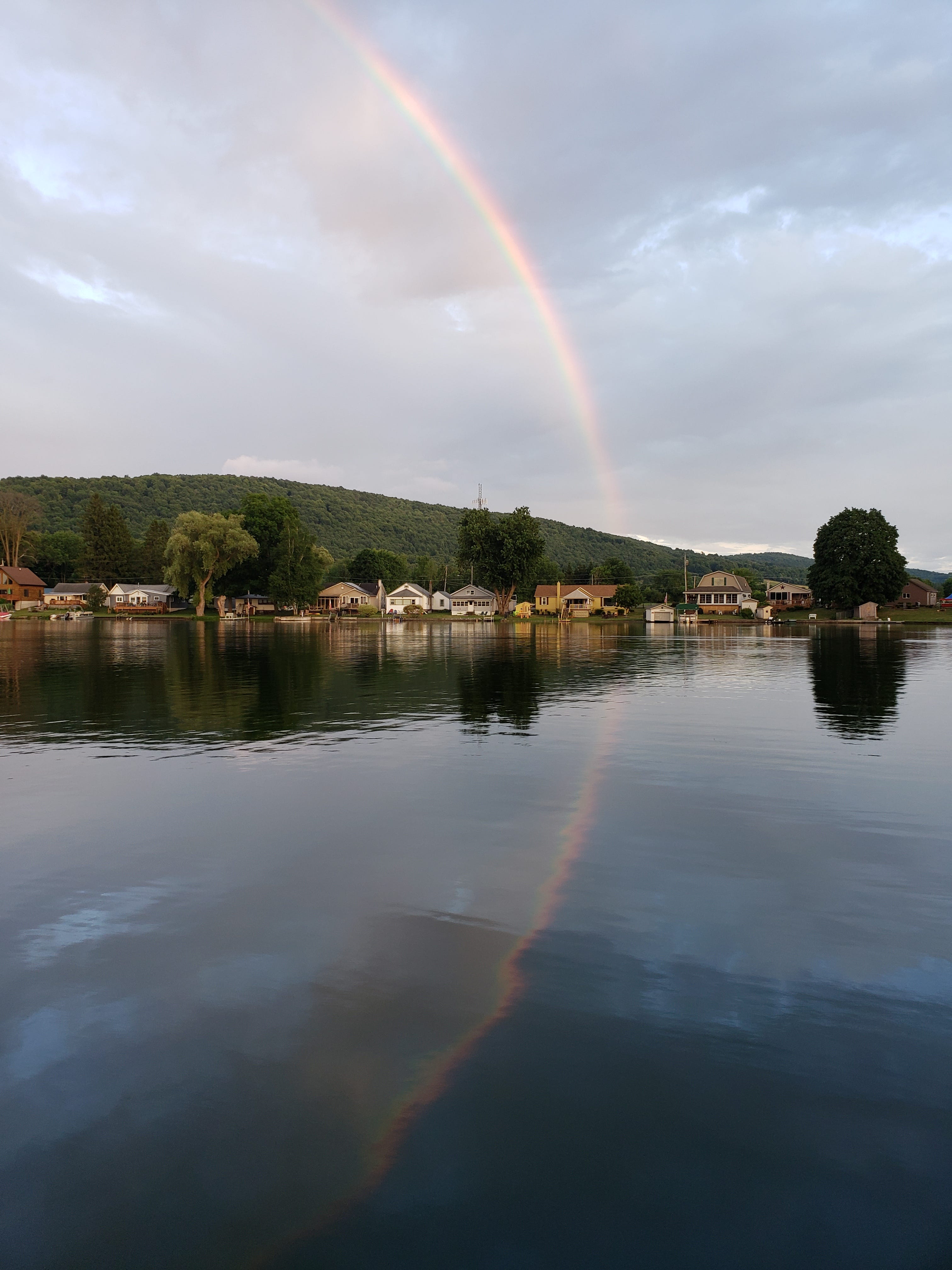
I have been thinking about water lately. A lot. I live on the shores of a small glacial lake, not one of the well-known Finger Lakes in New York State, but one of the lesser-known Kettle Lakes. Water signifies home to me and much more.
Photos by the author
Reading about how artificial intelligence (AI) is constructed at data centers, I was at first incredulous then disgusted, and finally fearful upon learning that just one data center used 1 billion gallons of water in 2024. Digging a little more, I discovered one Microsoft data center used 1.7 billion gallons of water in 2023. The Lawrence Berkeley National Laboratory registered water consumption by data centers in the U.S. in 2023 at 211 billion gallons of water used directly to cool and indirectly to produce the electricity needed to power the plants. The Berkeley National Laboratory estimates that, by 2028, the figure of 844 billion gallons of water will be consumed by data centers in this country. Reflecting on a figure of this unimaginable size, I continued reading to discover data centers’ water is not reuseable.
Unlike many countries in the world—think of the vast stretches of the African continent, one third of which is dry land, parched for most or all of the year—the United States is a country largely blessed with abundant ground water, rivers, natural lakes, streams, creeks, ponds, reservoirs, natural springs, wetlands, deltas, coastlines, permafrost water (after thawing), rain, snow, and inlets. This water resource is a magnificent bounty that has allowed many of us to take the source of all life on the planet for granted. Of course, not every section of the U.S. has an abundance of water. The west, parts of the south, and southwest are already looking toward the Great Lakes with something akin to the eyes of a thief. Four of the five Great Lakes share boundaries with Canada as well as the U.S. Maybe building cities in deserts was not such a great idea, in retrospect.
We will soon be approaching a new threshold, however. Drawing from aquifers and municipal water supplies, these vast data centers’ demand for water appears to be unquenchable. Evaporated water in cooling systems at data centers enters the air carrying various chemicals, including biocides, corrosion inhibitors, and heavy metals—none of it sounding healthy.
When the nerve hits, words flow like water. And this topic hits that nerve like an electrical jolt. Nothing survives without water. Not plants, not insects, not mammals on land or in the sea, and certainly not human beings. Yet, humans—particularly that odd and rarified breed of tech billionaires—are heedlessly, greedily, and arrogantly producing technology that they do not yet know the end result of what they have wrought. We can speculate based upon a factual basis, however, and the consequences of creating these massive data centers without regulation or forethought are grim.
For a little perspective about scale, a number of years ago, we traveled north, deep into the Quebec province in Canada and fished on a dark, remote lake tucked between vast tree-covered hills. The population of white-bellied walleyes in Lac Ypres seemed endless, so eager to grab hold of our fishing lines. Then something happened. The fish simply disappeared. Fishermen in the area called beautiful Ypres “lac mort” or a dead lake. Some scientific investigation led to the knowledge that granite bedrock and sensitive soils in the region made it difficult to “neutralize” significant amounts of wet sulphate and nitrate deposition, known as acid rain. Following a long period of emission controls by the governments of both Canada and the United States, the northern region of Quebec’s lakes began the slow process of recovery, not to full health but to a degree.
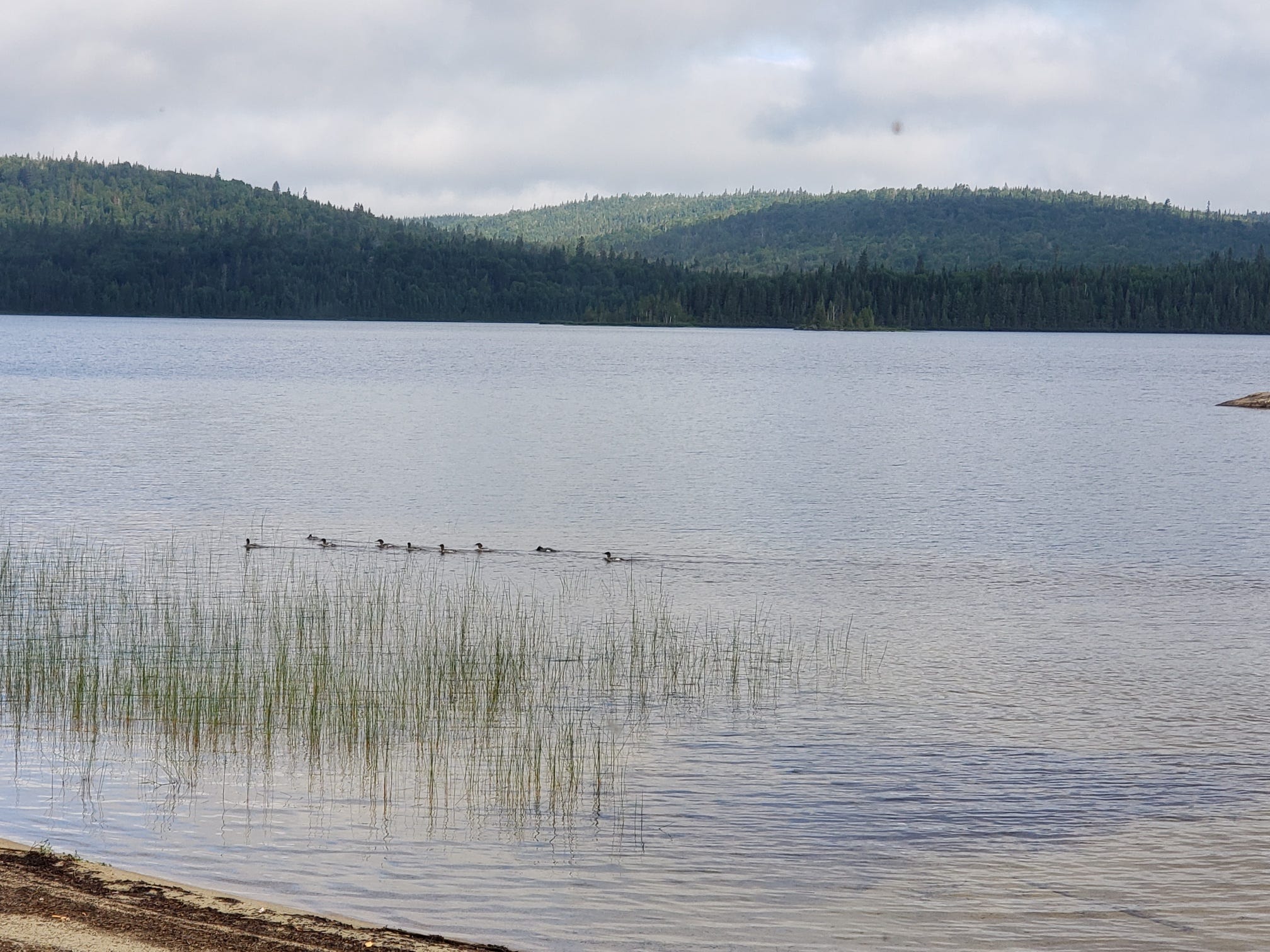
One lake, one consequence of human beings’ carelessly altering the natural world. Now multiply that one lake, one “lac mort” by the multitude of our ignorant, arrogant, thoughtless actions that destroy our waters and soils around the country and the world.
All photographic images here by the author.
Think these data centers’ water use will not affect you? Think again. Thinking again about rain after reading a narrative from the unusual point of view of a drop of water, I closed my book and listened to the weather. In that story, one raindrop falls on the head of King Ashurbanipal of Mesopotamia, this single drop waiting patiently to extract justice for what a king did to the rivers (similar to what he did to humans) in Elif Shafak’s novel There Are Rivers in the Sky. Since finishing that novel and another book, Is A River Alive? by the incomparable Robert Macfarlane, I have been even more concerned about water and the ways we interact with it.
Perhaps, I should mention water’s absence here. Macfarlane notes, “As water levels drop worldwide, things that have been hidden begin to surface.” This is not an exciting mystery to uncover but a most terrible consequence of worldwide changes in our climate due to multiple causes, not the least of which is our heedless consumption of energy.
Recalling that one drop of rain that falls on the head of the vicious, selfish king in Shafak’s symbolic novel, I wonder about the retribution all human beings will face when we have used up potable water? When there is nothing to quench our thirst—nothing for our greedy consumption, not the trillions of dollars made by the ultra-wealthy, nothing but the urgency for a single drop, just one drop of clean water to drink?
Thank you, Nancy, for writing what I've been thinking about over the last 6 months, and just haven't been able to put it into words. I want slowness, not fastness.
Do we all want to be swallowed up by technological efficiency? I have so many questions with no answers.
Thank you, Nancy Dafoe, for your powerful and thought provoking post. Avarice (greed) IS the root of all evil. The greed of data center billionaires is miles beyond shocking!